
Do Humans Have a Role in a 150 IQ AI World?
As artificial intelligence makes creation abundant, humans will not win by out-IQing the machines. We will win through taste, strategy, judgment, and the ability to decide what is worth building—and make it meaningful to other people.
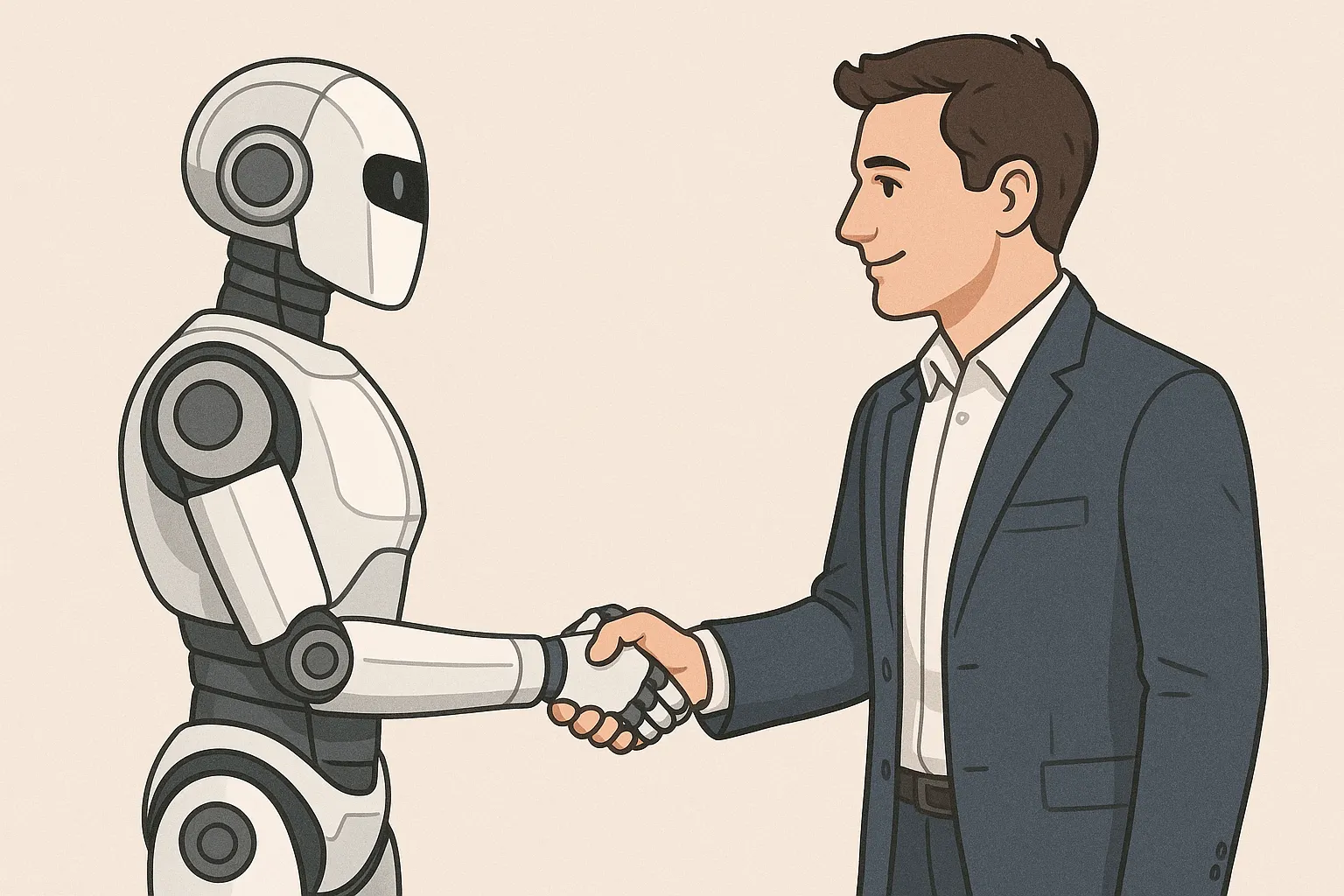
I was at a dinner recently with a group of entrepreneurs, the kind of folks who live and breathe building something from nothing. One of them leaned across the table and said, “Aaron, when AI hits an IQ of 150, what’s left for us humans?”
It’s a question I hear a lot these days, and it’s rooted in a real fear: that artificial intelligence, as it gets smarter, will crowd out human potential, leaving us obsolete.
I don’t think that’s how this story turns out. Humans have a vibrant future in an AI-powered world — not because we’ll outsmart AI, but because intelligence isn’t a single-track race. It’s a team sport, and humans are the ultimate utility players.
Let’s start with the premise. Experts estimate today’s AI operates at roughly a 110–120 IQ level — smart enough to write code, analyze data, or churn out a decent essay. The fear is that when AI hits 150 IQ, it’ll dominate every field, leaving no room for human contribution.
But this assumes intelligence is a one-dimensional ladder, where higher IQ always wins. That is definitely not how the world works. I’ve seen plenty of ~120 IQ leaders direct ~150 IQ specialists to incredible outcomes.
Think about a startup CEO rallying a team of brilliant engineers, or a film director guiding a genius cinematographer to capture a vision. The CEO or director doesn’t need to outcode or outshoot their team — they need to set the strategy, align the talent, and make the tough calls. That’s where humans shine. I don’t think AI changes that.
I’m working with a group of incredible people right now to build something new, and I can guarantee you that I am not the smartest person on this team, despite my role as its leader.
AI is absolutely helping engineers ~3x their code output, and I’m confident it’s going to keep getting better at scalability, context, simplicity, documentation, and readability — but the “taste” of building a great product is paramount, and every one of our product engineers are going to be necessary in the future to help define the “why” and the “what.”
AI’s real gift to humanity isn’t replacement — it’s abundance. It’s going to unlock a tidal wave of capability, turning ideas into reality faster than ever.
The democratization of creation will let anyone with a spark of an idea bring it to life, but here’s the catch: abundance breeds competition. When everyone can build, the market will flood with options — think App Store slop, but on steroids. Most of it will be noise: generic, uninspired, or just plain lazy.
The winners will be the humans who bring taste, strategy, thoughtfulness, and beauty to the table. These are the qualities AI can’t consistently replicate, because they’re rooted in human experience, intuition, and creativity.
The old rules of business are probably dead. For years, we’ve leaned on ideas like finding a “blue ocean” market — untapped spaces with no competition — or banking on the top player in a category gobbling up 70% of the market share. AI changes that. With barriers to entry crumbling, markets will be bigger and more fragmented than ever. Niche players will thrive by crafting something truly distinctive.
Take the craft beer boom: a decade ago, a few big brands dominated. Now, every town has a microbrewery with a loyal following, because people crave unique, well-crafted experiences. AI will amplify this trend across industries. The future belongs to those who can cut through the noise with something remarkable.
This is where human intelligence — across the IQ spectrum — comes in. High IQ or not, humans excel at synthesizing context, making judgment calls, and infusing work with meaning.
The 150 IQ AI might optimize a supply chain, but it takes a human to decide whether that chain prioritizes speed, cost, or sustainability, and why that matters to the customer. The 110 IQ designer with a keen eye for beauty can create a user interface that feels intuitive and delightful, even if AI generated the wireframe. And the 100 IQ entrepreneur with grit and vision can rally a team to build a company that resonates with its audience.
Each brings something AI can’t: the ability to connect, inspire, and make choices rooted in human values.
The future won’t be easy. Competition will be fierce, and the pace will be relentless. But that’s where humans thrive: in the messiness of creation, in the art of strategy, in the pursuit of something meaningful. AI will handle the heavy lifting — crunching numbers, generating drafts, automating tasks — but it’s humans who will decide what’s worth building and why.
It’ll take people across the IQ spectrum, from the visionary to the executor, working hard to shape a future that’s not just efficient but beautiful, thoughtful, and human.
The future isn’t about outsmarting AI — it’s about partnering with it to create a world that’s richer, more vibrant, and more human than ever before.
Let’s get to work.